You drank more than you meant to this weekend, and it scared you
This page is for the Monday after. You probably wouldn't call yourself an alcoholic, and I don't use that word either. You don't want to quit. You want to stop losing weekends, and you want to stop the thing where two drinks turn into a night you can't fully remember.
What the Monday after looks like
You wake up and the first thing you do is check your phone. Who did you text. What did you post. What did you spend. Then you go through the night in your head and there is a part of it you can't find, so you fill it in with what your friends tell you. You tell yourself it was a big weekend and you're fine, and you are fine, mostly, except this is the third time this summer and it's getting harder to laugh about. Then you go to work and you run the meeting, and nobody there has any idea.
I hear this a lot from gay men who are doing well. You're not drinking in the morning and you're not missing work. You go out on Saturday planning to have two, and you have seven, and sometimes there's a bump of something, or a hookup you wouldn't have chosen sober, and the shame on Sunday is worse than the hangover.
Can I be honest with you? I've been there
I went through my own version of this. It never got to the point of a diagnosis, and I never had a blackout, but I looked at how much I was going out and how much I was spending and how I felt on Sunday, and I decided to cut down. I went to therapy for it. I still go to the bar sometimes, and I drink much less, and it is still fun, which I did not believe before I tried it.
Our community has a stigma that if you have any problem with alcohol, the only answer is never drinking again. I don't think that's true for most people, and the research doesn't say that either. There is a lot of room between "no problem" and "treatment," and that room is what this page is about.
First, what actually counts as a drink
Most people count the glass, not the drink, so the number in their head is lower than the number in their body. A standard drink is a 12-ounce beer at five percent, a 5-ounce glass of wine, or 1.5 ounces of spirits. A bottle of wine is five drinks. A strong cocktail at a bar is often two. If you count that way for one weekend, you'll know more than most people ever find out.
And I'll be plain about the other end of it. If you're drinking every day, or several drinks every day, that is past what this page is for, and I'll say so when we talk.
Sober curious doesn't mean sober
It means you decide, on purpose, how much and when, instead of letting the night decide. For some men that's two drinks and a hard stop. For some it's no drinks at the bar and a glass of wine with dinner. For some it's three months off to see what changes, and then a decision. Can you go to a gay bar and not drink? Yes. Can it be fun? Yes, and I know that's hard to believe until you've done it once.
I talk about this on my channelOpen on YouTube ↗
What hypnosis does here
Hypnosis is a self-regulation tool, and I use it together with motivational interviewing and sober-curiosity coaching. In my experience that combination gives solid results for exactly this kind of goal, which is drinking less, on purpose, without quitting. I am not going to tell you one session fixes anything, because nobody can say that honestly.
First we define what better means for you, in plain words. Two drinks and home by one. No drinking on nights you're planning to hook up. A month off. I use motivational interviewing for this part, because the goal has to be yours and not mine. Then we use hypnosis on the moment that matters, which is almost always the second drink, because the second drink is the decision and the seventh is just momentum. I also use parts work, which is Internal Family Systems. A lot of the men I work with run businesses and drink to turn their brain off, and the drinking is doing a job. We find out what the job is, and we find another way to do it. You get a recording made for you, for Friday at six, and every few sessions we check whether it's working.
In my experience most people who do this work drink less. Some find out they need more than this, and then I help them find it.
What this is not, and when you need something else
This is sober-curiosity work, and it is not a replacement for addiction treatment. If you have alcohol use disorder, if you want to quit drinking and it is more serious than partying on the weekend, you need an addiction counselor. Under my license as a SUDPT I don't see clients for substance use disorder independently, only in appropriate settings, so for that I will refer you, and I would be glad to work alongside your treatment as part of your team.
Here is how you know it is more than this page. You drink every day, or most days. You drink in the morning, or to steady your hands. You can't stop once you start. You get shaky, sweaty, sick or very anxious when you don't drink. You keep drinking after it has cost you something real, like a job, a DUI or a relationship. Any one of those is a reason to see a doctor or an addiction counselor first, and it is not a reason to be ashamed.
And one thing I need you to take seriously. If you drink heavily every day, do not stop suddenly on your own. Alcohol withdrawal can cause seizures and can be life-threatening, and it needs medical supervision, so talk to a doctor before you change anything. If someone is confused, hallucinating or having a seizure after stopping, call 911. For free, confidential help finding treatment, the SAMHSA National Helpline is 1-800-662-4357, any hour. If you are in crisis, call or text 988.
If it's his drinking, not yours
Then this is the wrong page, and I wrote a different one for you: when the person you love is drinking or using.
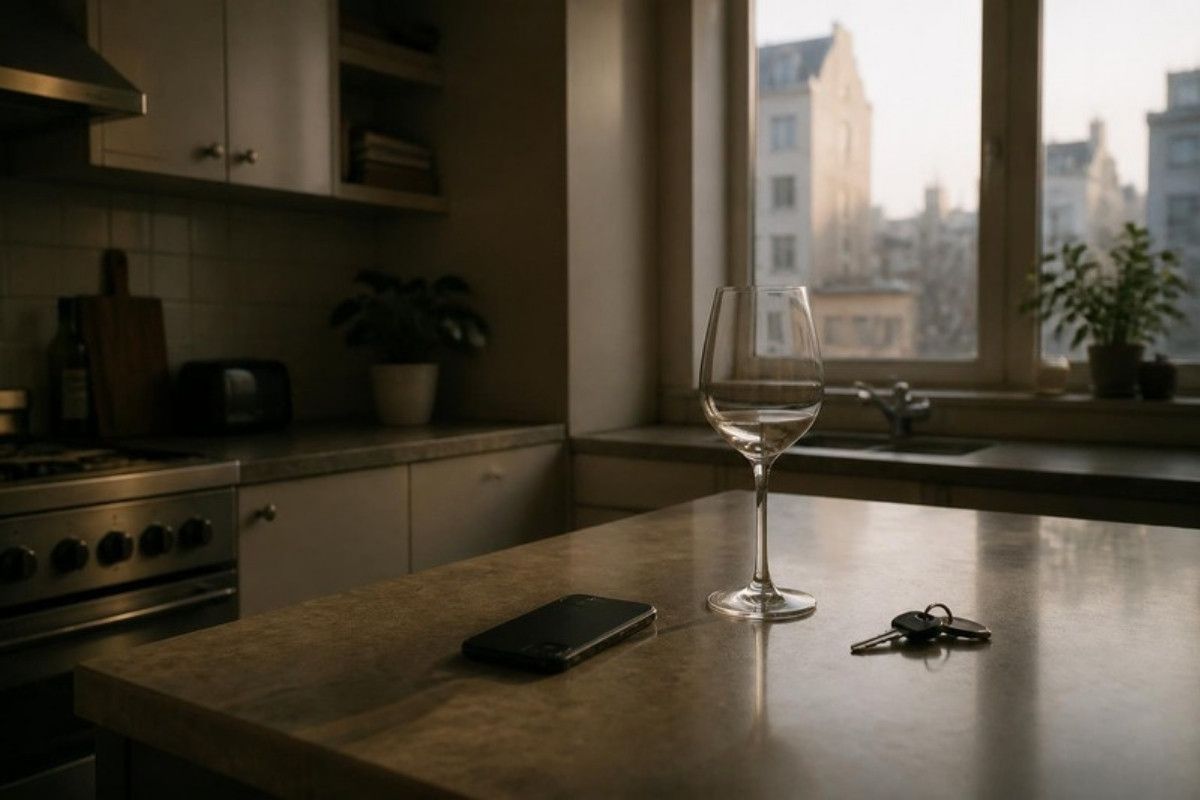
If this weekend scared you
- Weekly sessions, $250. One hour, online.
- If a slot is open I can usually see you this week. I keep early mornings and evenings.
- Three-day intensive, $1,500, if you want to reset fast.
Request an appointment (opens the secure SimplePractice appointment request form in a new tab)
Send the request and tell me what happened. I reply within one to two business days with paperwork and a link to pay and book.
Questions men ask me before they send the request
Am I an alcoholic?
I don't use that word, and the field doesn't either anymore. Alcohol use disorder is a spectrum, and where you are on it is a conversation, not an online quiz. What I can tell you now is this: if you drink every day, or you can't stop once you start, you need an addiction counselor rather than this page, and I will say so and refer you.
Do I have to quit completely?
No. That is the whole point of sober curiosity. You decide what you want your drinking to look like, and we work toward that. And if you try to cut down and you can't, that is information, and we talk about what it means instead of pretending we didn't see it.
Can you hypnotize me to stop drinking?
No, and nobody can promise that honestly. What hypnosis does well here is the moment of decision, and the job the drinking is doing for you, like turning off a brain that won't stop. That is where it earns its place. Some people drink less after a few sessions and some take longer, and I'll tell you what I'm seeing as we go.
What if it's not just alcohol?
A weekend in our community is often not just alcohol, and I'm not going to pretend otherwise, so bring it. We can talk about it the same way. If what you're using is daily, or it is meth or G, that is not a sober-curiosity question anymore, and I will tell you where to go and help you get there.
Will anyone find out?
No. Notes are kept in a HIPAA-compliant system, I don't talk about clients, and nothing about you shows up in my videos or writing unless you agree to it in writing. You can say no, and most people do.
How fast can we start?
Send a request today and tell me what happened this weekend, in as much or as little detail as you want. I reply within one to two business days with paperwork and a link to pay and book. I keep early morning and evening slots, and if one is open I can usually see you this week.

Not sure this is for you? That is a fine place to start.
Send a request and tell me what is actually going on. I reply within one to two business days with your intake paperwork and a secure link to pay and pick your time. No payment is taken at the request stage, and if I am not the right person for this I will say so and point you somewhere better.
Requests go to a secure, HIPAA-compliant SimplePractice form — no payment is taken there. Sessions are held online by video, worldwide.